Colors play a vital role in how we perceive brands, even if we don't consciously realize it. Think of McDonald's vibrant yellow, Starbucks' calming green, or Coca-Cola’s bold red. These colors aren't random—they’re carefully chosen to reflect each brand's identity. Whether you’re launching a new business or refreshing your current look, selecting the right color palette is crucial to making a lasting impression.
What is a Color Palette?
A color palette is the cornerstone of your brand's identity. It’s a carefully selected set of colors used consistently across all branding materials, from your logo to your website and marketing campaigns. Beyond aesthetics, your palette communicates your brand's personality and values at first glance. Think of your palette as a visual tone of voice: it sets the mood and connects with your audience. Your color palette might be as simple as one primary color plus black and white, or it could include several complementary colors to add more depth.
For more information on color theory and how colors influence perception, check out this guide on color psychology for deeper insights.
Why Are Brand Colors So Important?
Your brand colors aren't just for decoration—they’re a strategic tool to make your business stand out in a crowded market. They play a big role in shaping the first impression your audience has of your brand. By consistently applying your brand colors across your materials, you create a cohesive and memorable identity.
Your brand colors should be present in:
- 1) Your logo
- 2) Website design
- 3) Brochures and flyers
- 4) Ads and marketing campaigns
- 5) Merchandise (T-shirts, mugs, etc.)
- 6) Office interiors and event decor
- 7) Business cards, letterheads, and email signatures
- 8) Employee uniforms

The Psychology Behind Colors
Each color carries its own emotional and psychological associations, and selecting the right ones can influence how your audience perceives your business. Here’s a quick guide to some common color meanings
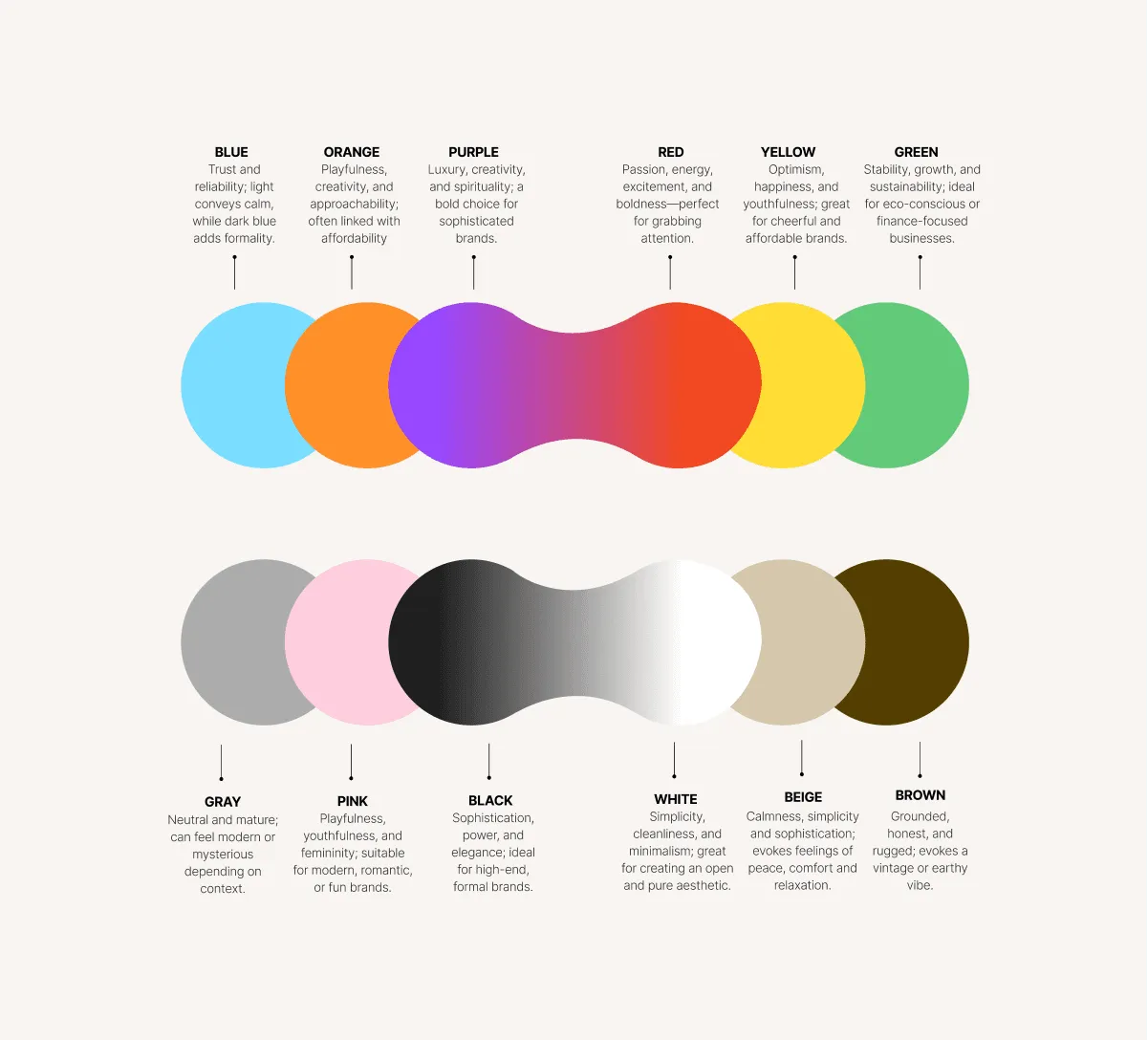
Each color carries its own emotional and psychological associations, and selecting the right ones can influence how your audience perceives your business. Here’s a quick guide to some common color meanings:
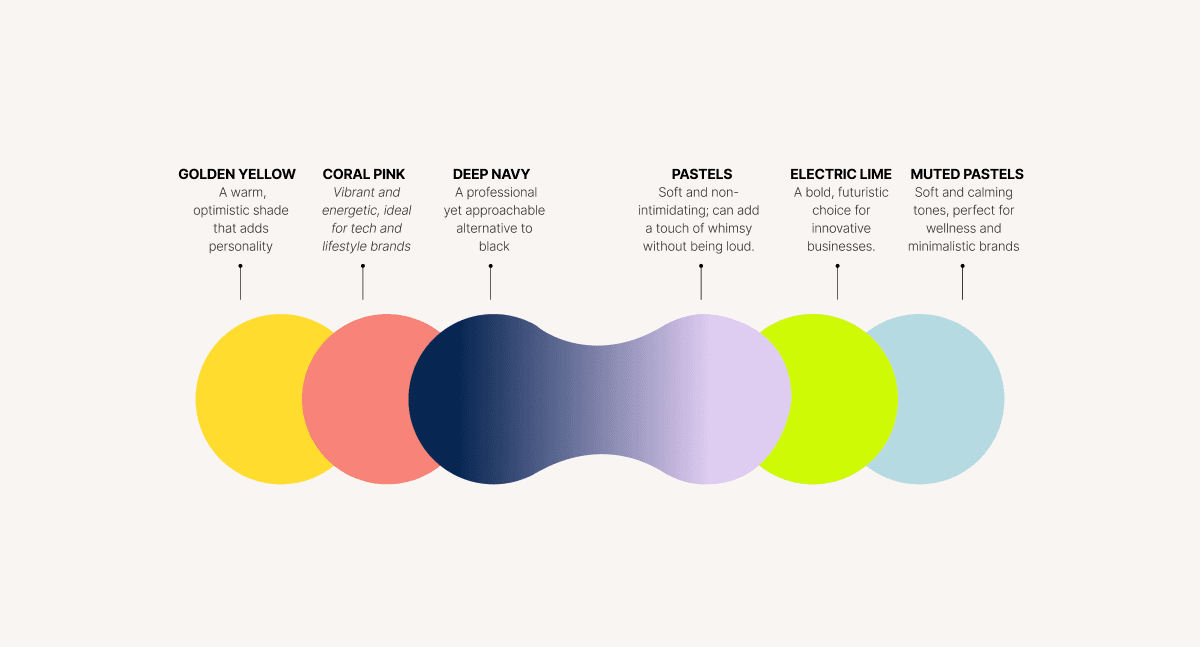
Modern Color Trends: Bonus Picks for Your Palette
Here are some trending colors that modern brands use to stand out:
Creating Your Brand Color Palette
Ready to craft your palette? Follow this simple formula:
- • Choose a Base Color: This is your primary brand color, making up around 60% of your palette. It should reflect the core values and personality of your brand.
- • Pick an Accent Color: Your accent color should complement your base color and add contrast. It will take up about 30% of your palette.
- • Add a Neutral: Use a neutral color (like white, gray, or beige) to balance your palette. This will make up the remaining 10%.
For example, if your base is a bold red, consider pairing it with a calming gray as your neutral and a vibrant orange as your accent for a dynamic and modern look.
To learn more about creating harmonious color combinations, check out this comprehensive color palette guide for generating the perfect color schemes.
Let’s Build Your Brand Together!
Your brand’s colour palette is more than just a collection of hues—it’s a powerful tool that speaks volumes about who you are as a business. Ready to create a colour palette that truly captures your brand’s essence?
Conclusion
Contact us today to collaborate with our team of design experts. From crafting your brand identity to developing stunning websites, we’ll help your business stand out and make a lasting impression.